From Stripes to Stars: India’s 77th Independence Soars with Hope

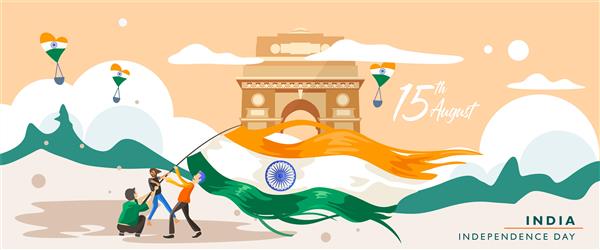
As the tricolor flag unfurls once again against the azure skies, marking the 77th year of India’s hard-fought independence, a surge of pride and patriotism sweeps across the nation. Every corner of this diverse land reverberates with the echoes of sacrifice, courage, and the unyielding spirit of the countless heroes who envisioned a free India. This Independence Day, we not only celebrate our past but also embrace the boundless opportunities that lie ahead – in development, empowerment, technology, and space exploration.

Development: Paving the Path to Progress
From the struggles of post-independence years to the present, India has come a long way. The relentless efforts of its people and leaders have borne fruit in the form of unprecedented economic growth, technological advancements, and infrastructural marvels. As we celebrate 77 years of independence, let’s remember that true development lies not just in towering skyscrapers but in the upliftment of every citizen. Together, we’ve built a nation where digital literacy and access to education are shaping young minds, transforming them into the architects of tomorrow’s India.

Empowerment: Igniting Minds, Fostering Dreams
Our nation’s strength lies in its people. The youth, armed with passion and determination, are the torchbearers of our future. As we celebrate this Independence Day, let’s empower our young minds with knowledge, resources, and the unwavering belief that they can create positive change. From rural villages to urban centers, let’s provide equal opportunities for growth and innovation, ensuring that every dream finds wings to soar.

Technological Advancements: Scripting the Digital Saga
The 21st century has witnessed India’s meteoric rise in the realm of technology. From pioneering startups to groundbreaking innovations, the nation has embraced its digital destiny with open arms. As we hoist the flag on this special day, let’s celebrate the fact that India is not just adapting to technological advancements but actively shaping them. Our youth is writing codes that power global platforms, and our entrepreneurs are redefining industries. This Independence Day, let’s pledge to continue this journey of technological excellence, making India a digital powerhouse on the world stage.

Space Missions: Touching the Stars, Inspiring Generations
In the vast expanse of space, India has carved its name with pride. The achievements of the Indian Space Research Organisation (ISRO) have not only placed us among the world’s space-faring nations but have also ignited a passion for science and exploration among the youth. Chandrayaan 2’s journey to the moon and India’s successful Mars Orbiter Mission (Mangalyaan) reminds us that the sky is not the limit – it’s just the beginning. As we commemorate this Independence Day, let’s inspire the young minds of India to reach for the stars and contribute to the realm of space exploration.

Envisioning a Glorious Future Together
As the tricolor flutters in the wind, it reminds us that the soul of India is rooted in its diversity, resilience, and unbreakable unity. This Independence Day, let’s celebrate the journey of 77 years with a heart full of gratitude for our forebearers who fought for our freedom. Let’s also look forward with hope and determination, recognizing that our development, empowerment, technological prowess, and space explorations will define our nation’s destiny.

To the youth of India, remember that the future belongs to you. Let the stories of our past inspire you, the opportunities of the present propel you, and the dreams of a better India guide you. As the tricolor stands tall, it’s a reminder that the heartbeats of over a billion people throb in unison, shaping a nation that’s destined for greatness.

Let your dreams be the compass and your determination the fuel, as you navigate the path towards a resplendent India.

– Lalith Kumar Vemali

Happy 77th Independence Day, India!
Jai Hind!
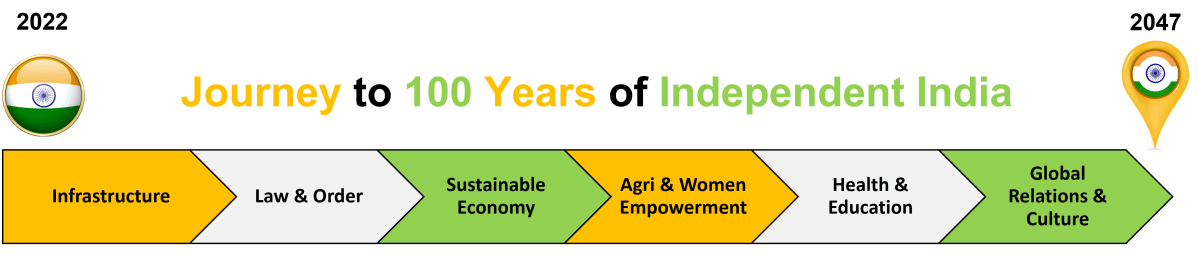
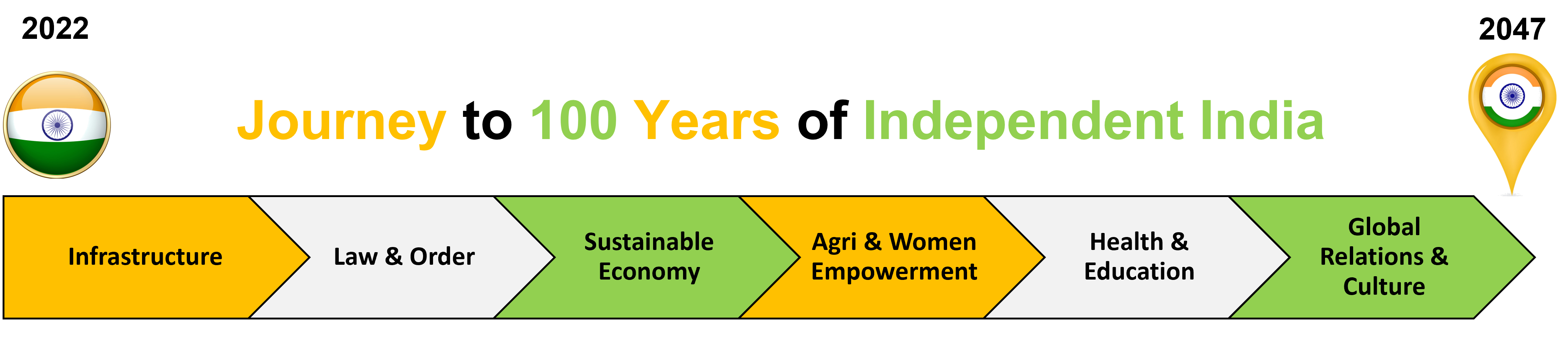
Journey to 100 Years of Independent India

75 years of Independent India!

A lot happened, and a lot is yet to happen. No country is perfect nor the people, every country has its own challenges be it Political, Geographical, or whatsoever. While the challenges always seem invincible, there is always a way to find solutions to each and every problem. As a nation, we have achieved many great things which is evident in history.

This is the right time to create goals for the next 25 years (marking 100 Years of Independence, the Year 2047).

25 aspects India need to focus in the next 25 years to become Self-reliant and Sustainable India

Infrastructure

  • Renewable Energy: Ability to achieve energy consumption needs through renewable sources without burning fossil fuels and creating pollution
  • Rail, Road, Air, Water Connectivity: To unleash the potential of India, a network across all 4 channels forming a hybrid grid is highly needed
  • Tech & Manufacturing Parks: Build Tech & Manufacturing Hubs across each state further dividing into clusters, thereby inviting investments with friendly business policies
  • Affordable & Sustainable Housing: Shelter for all citizens is critical and building sustainable homes is key agenda to achieve

Law & Order

  • Uniform Civil Law: One Nation One Law to be implemented, thereby reducing Religious intolerance. All are equal before the law, be it, President or Common Man or any religion.
  • Freebie-less Democratic Nation: Abolish welfare schemes that are a burden to the exchequer, be it state or central govt. Respective Political parties to be made responsible for creating a revenue vacuum due to unnecessary welfare schemes. Inclusive Governance is needed.
  • Professional Administration: Digitize the processes of working at all levels in Govt – a Paperless Governing process run by a combination of Civil Servants and Professionals for better administration
  • Taxing Politicians & Political Parties: Fast Track Independent courts to handle Political & Political Parties scams and heavy taxing to be levied as part of recovery basis the count from the respective party.

Sustainable Economy

  • Make in India to Quality Indian Product: Encourage make in India with Quality as a sense of pride in the craftsmanship. This should become a national movement to raise the quality standards of the goods produced in India.
  • Ecosystem Revolution: Connect across Industries, Organizations & Govt Departments, etc, Communicate about the best skills or services they can provide, and Collaborate to achieve the best outcome which fulfills the needs of Citizens.
  • Encouraging Unorganized & MSME Businesses: Small Business Friendly policies are needed which make life simple for citizens to fulfill day-to-day needs. Encourage Local businesses.
  • National Water Grid: Govt must create a National Water Council, which handles the water-sharing agreements between states & union territories. This National Water Grid must be implemented in a phased manner with the agreements reviewed every 3-5 years.
  • Increase Economic Stability: The flow of Capital and Liquidity needs to be increased. Banks and other financial institutions are facing a liquidity crunch. The government should help them with cash support. This reduces the uncertainty in Investments.
  • Invest in high-potential sectors with strong FDI Policies: India has the great opportunity to achieve $1 trillion in economic value by establishing itself as a hub for manufacturers of electronics, defense, space, medical, chemicals, textiles, auto goods, and pharmaceuticals. By increasing investments in these sectors, India would not only increase its potential for exports but also decrease its reliance on imports, curbing the amount of money spent by citizens on foreign products.

Agri & Women Empowerment

  • Increase Agricultural Growth: India shouldn’t drop the Agri sector from their focus, we need to go back to our strength. Govt must train more people in agriculture and different ways of farming and provide technical support to youngsters who wish to take up farming.
  • Urbanizing Rural India by Providing Infra support: Investing in better infra and urban services, such as transportation & water management in Rural areas would create a resurgence of the housing market and give banks more lending opportunities. Inevitably, more development and urbanization would create new opportunities for international investments, eco-tourism, and manufacturing exports.
  • Natural Farming Approaches: Encourage natural farming and commercial crop farming as traditional crop farming is creating imbalances in supply and demand.
  • Strong Farm & Women Laws: Strong Farm laws for open and transparent minimum support prices need to be implemented and Govt to create a platform to open channels directly for foreign export where excess availability. The role of women is integral to a sustainable future, Naari Shakti is going to be Desh ki Shakti. Strong policy on this which is inclusive from top and bottom is highly required.

Health & Education

  • Right to Uniform Value-based Education & Skills: Right to Education to be re-named as Right to Uniform Value-based Education, a fundamental right to provide uniform value-based education to every child in India. It must not only concentrate on school education but also help graduates to improve their skill levels and values in building a peaceful society. Proper world-class training must be given to graduates in Industrial skills, vocational & character building skills.
  • Encourage Medical Research, Innovation & Manufacturing (Medical Devices): Encourage investments in Medical Research and Manufacturing of medical devices through the Make in Quality Indian Product initiative. Encourage Innovation in bringing back our Vedic health approaches to the world for benefit of a better healthy society.
  • Public – Private – Community Organization Collaborations – Health & Education Projects: Public-private and NGO partnerships can help achieve govt initiatives to be successfully implemented in both Health & Education sectors in collaboration be it, project management, processes, best practices, and quality control. Govt should provide tax benefits & other incentives to encourage private participation in key areas of healthcare & education while ensuring sustainability instead of forcing CSR.
  • Right to Primary Health care: The experiences across the world in the wake of the Covid-19 pandemic have made an emphatic case for increased public investment in health expenditure. Public health should indeed be deemed non-excludable and non-rivalrous and hence a public good similar to national defense as defined by the economist Paul Samuelson. Right to Primary Healthcare to be made an integral part of Right to Life under Article 21. This ensures healthy and preventive measures at the initial stages of the disease before getting worsens.

Global Relations & Culture

  • Universalist Mindset: Indian culture has always been Vasudhaiva Kutumbakam very open-ended and kind to embracing the entire universe in its philosophy. In recent times, we have become too “absolutist” with each set of people promoting their own ideas and shutting down others. India needs to go back to its roots and start re-embracing the universalist mindset that makes us unique across the world.
  • Destination Hub – Education, Health, Tourism, Innovation, Farming, Religion & Vedic Culture: Need to have clusters across each state of India for Education, Health, Hospitality, Innovation, Farming, Religion & Vedic Culture, etc which further needs to be connected as Network of Hubs to encourage tourism in these sectors. India is a land of diversified cultures and is known for its heritage, Vedic culture, scenic nature, multiple languages, rich human talent, etc. This is yet to be explored to the core which can add to economic value.
  • Be a Vishwa Guru (Knowledge Hub): India can set an example of how we can move towards modernity and still save ourselves from mindless Westernisation. Our civilizational culture has provided us with a strong philosophical foundation that has several unique features. Our spiritual democracy, where Ekam Sat, Vipra Bahuda Vadanti (the truth is one, but the wise men describe the same differently) serves as the cornerstone of our approach to diverse ways of worship, makes India a home for all religions that live in harmony.

To achieve the above, one need not be a politician, a responsible citizen of India with dreams and high aspirations to build a sustainable and self-reliant India would be enough. Today we might celebrate 75 Years of Independence which is the gift to us by our grandfathers and great grandfathers. It is our responsibility from here on to build on top of it.

Be the Change, I want my India to be Self-reliant, Sustainable, and lead by example. Would you also ?? ??

Gurukul Education Vs School

Human brain tends to change and synchronizes itself according to circumstances. I have seen this when iam exploring myself at “Kala Ashram”. A place where i met many intellectuals with different thoughts and ideologies along with different set of religions, age group etc. People meet here to learn, engage and share. Guruji  shares his experiences in the past, how system used to be and how it used to work etc. Learning comes when we have something in our brain which is eating to explore.

Here i have seen a different world which may be a replica of once upon a time in India. The system is set in such a way, one who visits will feel like he is in some Gurukul.

I don’t know whether we do have similar places any where in India, but in a life time i have experienced it. We shared various views related to the Systems that used to be existed in India, different types of rulings, starting from colonial rule to present system. One realizes what we used to be and what we have lost in life due to modernization and liberalization of course even though it bought development, but still it exploited the culture and customs prevailing according to our Indian System or ecology. So many customs, culture are getting extinct due to present day chaos. Can we get rid of this ? Can we safe guard ourselves ? Can we identify solution ?

Since few days i was reading in many news papers, magazines and Internet articles about Indian Education opened new vistas by allowing foreign universities to set up their campuses within India. I was in a dilemma are we lost some where ?

The concept of School came in the minds of British only after seeing the Gurukul System in India, It is our Vedas gave solutions and thought process for scientific innovation and development, and today we are in a state of extinct.

I accept that foreign universities like Harvard’s, MIT, Yale, CMU etc had lot of intellectual capital and research base, but in my opinion these universities should have collaboration campuses with Universities and affiliated or extension campuses with private colleges. This would bring exchange of knowledge and even development of the Education considering world as global village.

Here i would like to add some information with regards to the various educations systems that used to exist in Indian system, we used to have Pottery, Painting, Clay toys, Bamboo toys, music etc. these are not treated as a course list in any education institute ( Music &  Dance is  exceptional). These used to be learnt by the traditional family persons and those were exploited in Industrial revolution, now we could not even see a person who knew those. Pre-British our education system was totally different, infact Britishers could break the Indian jinx and could rule us for 150 years only after disturbing our Indian Education system.

I would share few snaps with regards to “Kala Ashram” where i could see some Gurukul is still prevailing in India.